What Are the Top Mobile Robot Types in 2026?
Outdoor, Agricultural, and Construction Mobile Robots
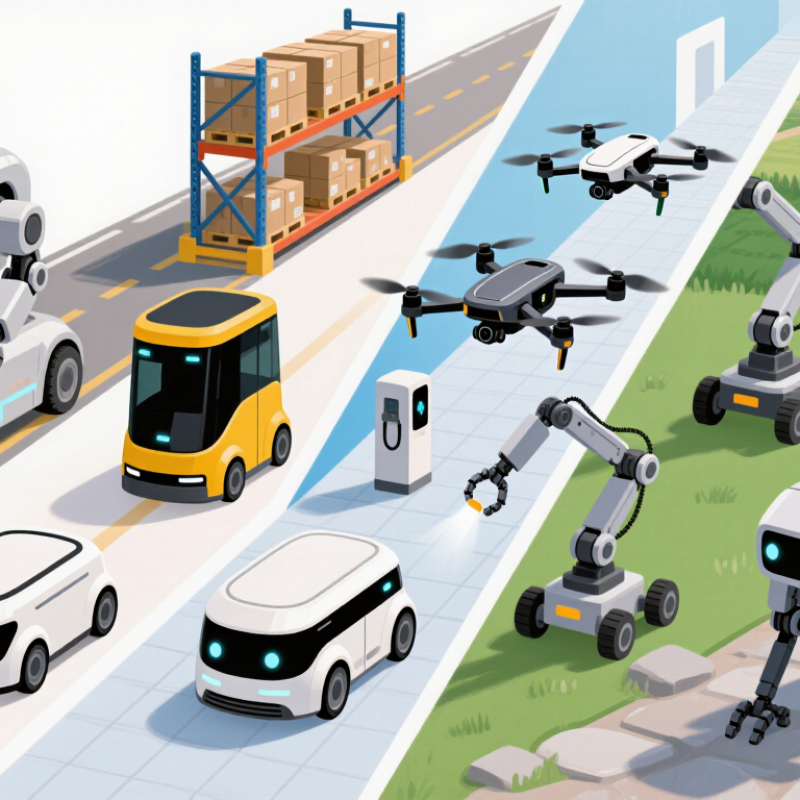
By 2026, outdoor mobile robots will focus on transport, inspection, and repetitive ground work.
Autonomous utility vehicles can carry tools across large sites, while inspection robots scan roads, pipelines, and remote facilities. They use cameras, lidar, satellite positioning, and obstacle detection. A dusty lens or weak signal can still reduce accuracy. Human operators remain essential near workers, traffic, livestock, and uneven terrain.
Agricultural robots are becoming more selective, not fully universal. Small field machines can remove weeds, monitor crops, distribute materials, or collect ripe produce. Their narrow wheels protect soil better than heavy equipment. Thermal cameras and plant imaging help identify stress before leaves visibly change. However, mud, dense foliage, and changing sunlight confuse sensors. Farmers should test performance across several seasons, rather than trust a short demonstration.
Construction mobile robots are built for harsh, shifting environments. Autonomous haulers move materials, robotic platforms survey structures, and tracked units inspect unstable areas. Their value grows when sites are noisy, crowded, and physically demanding. Reliable systems need geofencing, emergency stops, clear warning signals, and detailed operating logs. A robot that performs well on flat ground may fail beside a fresh trench. That limitation deserves attention. Careful deployment, trained supervisors, and regular safety checks often matter more than impressive automation claims.