How to Choose AGV AMR Robots for Your Warehouse?
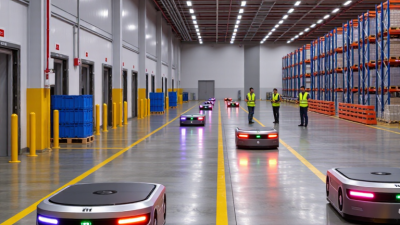
Choosing the right agv amr robots for a warehouse is not a simple equipment purchase. It is an operational decision.
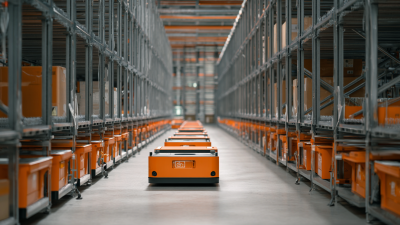
A robot that performs well in a showroom may struggle beside narrow aisles, uneven floors, or crowded picking zones. In real warehouse projects, small details often decide success. Rack spacing, pallet quality, Wi-Fi coverage, shift patterns, and worker movement all matter. A practical evaluation should begin with current workflows, not attractive product features.
AGVs usually follow defined routes, while AMRs use sensors and software to adjust their paths. The difference sounds clear, but actual systems can overlap. Therefore, buyers should examine the complete application. Check payload capacity, turning radius, navigation accuracy, battery charging, safety functions, and software integration. Ask suppliers for performance evidence from warehouses with similar layouts. Request realistic cycle-time data, not only peak demonstrations.
Cost deserves careful attention. Hardware is only part of the investment. Installation, mapping, training, maintenance, spare parts, and system updates can change the final figure. A lower purchase price may create higher operating effort later. That assumption should be tested.
The best choice depends on measurable needs. Define the required throughput, travel distance, uptime, and return period. Then compare solutions against those targets. Do not force automation into every process. Some manual tasks may remain more flexible and economical. That is not a failure. It may be the more reliable design.
This guide explains how to assess agv amr robots with practical criteria, supplier questions, and implementation risks. It also considers lessons from deployment experience, because warehouse conditions rarely match the original plan perfectly.
Define Warehouse Goals Using IFR’s 86,000-Unit Logistics-Robot Benchmark
How to Choose AGV AMR Robots for Your Warehouse?
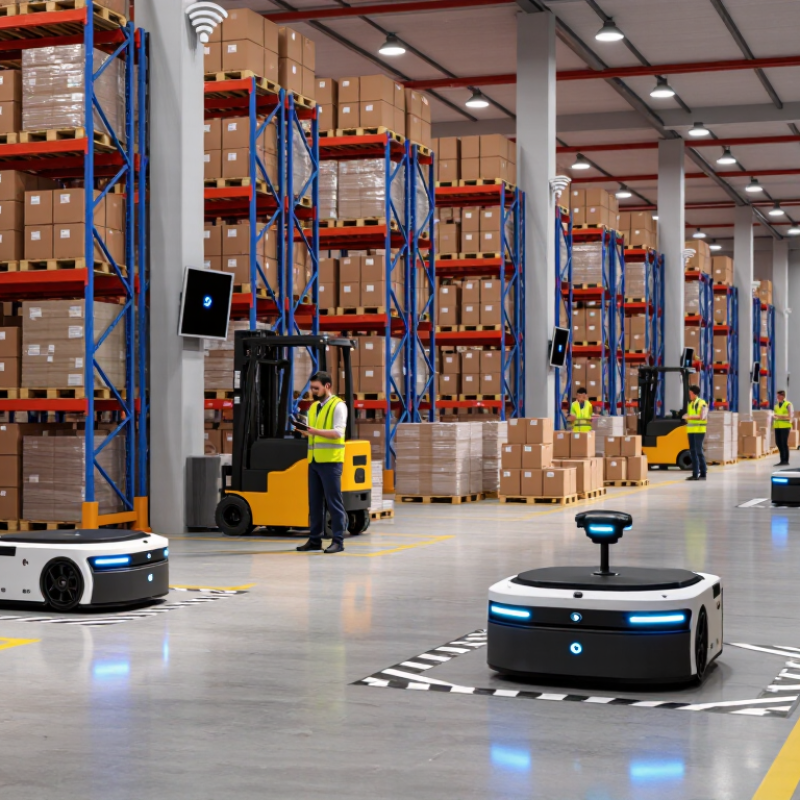
The International Federation of Robotics reports an 86,000-unit benchmark for logistics robots. Use this figure as market evidence, not as your purchasing target. Your warehouse has different aisles, labor patterns, storage heights, and safety requirements.
Start with measurable goals. Record daily moves, peak-hour orders, travel distances, and loading delays. A warehouse processing 600 totes daily may need fewer robots than a facility handling 300 totes during a short evening peak. Define the real bottleneck first. Is it picking, transport, replenishment, or dock congestion?
AGVs suit stable routes and repeatable tasks.
AMRs can adapt better when people, carts, and temporary obstacles share the floor.
This distinction sounds simple. It is not.
During a pilot, measure completed moves per hour, blocked time, battery charging, operator interventions, and near-miss events. Leave space for failure. An early estimate may be wrong. One team may expect ten robots, then discover that charging queues reduce output sharply. That mistake matters.
Use the 86,000-unit benchmark to understand adoption scale and supplier experience. Do not treat it as proof that more automation guarantees better performance. Compare each proposal with your baseline labor hours, order accuracy, maintenance capacity, and expansion plans. Ask for test data from conditions resembling your warehouse, including narrow aisles and uneven traffic. A polished demonstration can hide ordinary operating problems.
Compare AGVs and AMRs by Navigation, Payload, Speed, and Workflow
How to Choose AGV AMR Robots for Your Warehouse?
Compare AGVs and AMRs by Navigation, Payload, Speed, and Workflow
AGVs follow planned routes using magnetic tape, reflectors, wires, or fixed markers. They suit stable warehouse layouts and repeatable transport tasks. AMRs use sensors, maps, and software to navigate changing spaces. They can avoid obstacles and select alternate routes. This flexibility helps when storage locations, people, or picking stations change frequently.
Payload needs careful measurement. Include the load, container, pallet, and possible weight shifts. A robot rated for 500 kilograms may perform poorly on uneven floors or steep ramps. Speed also requires context. Check acceleration, turning distance, stopping space, and battery behavior. A fast robot can still reduce output if it queues at narrow aisles. Safety and traffic control matter more than brochure speed.
Tips: Map your workflow before comparing machines. Record travel distances, aisle widths, floor conditions, peak loads, and daily task volume. Test both robot types during busy periods, not only quiet shifts. Ask operators about handoff points and awkward manual steps. No comparison table is perfect. A simple AGV may outperform an AMR in one fixed route, while an AMR may win in a mixed workflow. Review real data after a pilot. Some assumptions will be wrong. That is useful.
| Comparison Dimension | AGV — Automated Guided Vehicle | AMR — Autonomous Mobile Robot | Warehouse Selection Guidance |
|---|---|---|---|
| Navigation | Fixed-route navigation Typically uses magnetic tape, guide wires, reflectors, QR codes, or other mapped guide infrastructure. |
Dynamic navigation Usually combines LiDAR, cameras, wheel odometry, inertial sensors, and software maps to plan routes around obstacles. |
Choose an AGV when routes are stable and highly predictable. Choose an AMR when aisles, storage locations, or traffic patterns change frequently. |
| Typical Payload | Common warehouse configurations range from approximately 500 to 5,000 kg; specialized units can handle more. | Common warehouse configurations range from approximately 100 to 1,500 kg; heavy-payload models are also available. | Match the rated payload to the heaviest normal load, while allowing capacity for the pallet, container, fixture, and safety margin. |
| Travel Speed | Typical operating speeds are approximately 0.8 to 1.5 m/s, depending on vehicle type, load, floor condition, and safety rules. | Typical operating speeds are approximately 0.8 to 2.0 m/s; actual speed is reduced in congested or pedestrian areas. | Compare average completed-trip time rather than maximum speed alone. Pickup, drop-off, waiting, and charging often affect throughput more than top speed. |
| Workflow Fit | Best for repetitive point-to-point transport, pallet movement, conveyor transfer, and fixed milk-run routes. | Best for goods-to-person delivery, flexible replenishment, order-picking support, and variable point-to-point transport. | Use AGVs for standardized flows with limited route variation. Use AMRs for workflows requiring frequent route changes or mixed pedestrian traffic. |
| Infrastructure Requirement | Often requires guide paths, reflectors, beacons, floor markers, dedicated lanes, or interface equipment. | Usually requires a mapped operating area, charging stations, network coverage, and clearly defined safety zones rather than physical guide paths. | Evaluate installation work, floor quality, network coverage, aisle width, docking points, and integration with doors, lifts, and conveyors. |
| Route Flexibility | Low to moderate. Route changes may require guide-path modification, software changes, or both. | High. Digital maps and task rules can generally be updated without installing a new physical route. | AMRs are generally more suitable for seasonal layouts, expanding product ranges, and facilities with changing storage locations. |
| Obstacle Handling | May stop when the guided path is blocked; bypass capability depends on vehicle design and control system. | Can normally detect obstacles, slow down, stop, and calculate an alternative route within its mapped operating area. | Confirm how each system handles persistent obstacles, temporary obstructions, narrow aisles, pedestrians, and emergency stops. |
| Positioning Accuracy | Often approximately ±10 to ±30 mm under suitable conditions and with correctly installed guidance infrastructure. | Often approximately ±10 to ±50 mm, depending on sensors, floor conditions, localization method, and docking technology. | Check the accuracy required at conveyors, racks, pallet stations, lifts, and charging contacts instead of relying only on general navigation accuracy. |
| Implementation Time | Typically longer when guide paths, dedicated lanes, or significant site modifications are required. | Typically faster to pilot when the facility can be digitally mapped and existing routes do not require major physical changes. | Request a site-specific implementation plan covering layout survey, simulation, integration, testing, operator training, and acceptance criteria. |
| Scalability | Scales effectively in stable, high-volume flows, but additional routes or layout changes may require infrastructure updates. | Scales flexibly by adding robots and adjusting fleet rules, although traffic management and charging capacity must also scale. | Estimate peak-hour demand, fleet size, charging downtime, traffic density, and the number of simultaneous pickup and delivery tasks. |
| Human-Robot Collaboration | Suitable for shared areas when equipped and configured with compliant safety systems, but fixed routes may require controlled crossings. | Designed for dynamic shared environments, with speed reduction, obstacle detection, and safety zones configured for the application. | Both types require a site-specific risk assessment, safety validation, signage, training, and compliance with applicable machinery-safety requirements. |
| Fleet Management | Often coordinated through a vehicle controller or warehouse execution interface for predefined missions and routes. | Typically coordinated through a fleet manager that assigns tasks, manages traffic, controls charging, and optimizes routes. | Verify integration with the warehouse management system, warehouse control system, warehouse execution system, conveyors, doors, lifts, and ERP platforms. |
| Best-Fit Warehouse Profile | High-volume, repetitive, predictable operations with stable layouts and clearly defined transport lanes. | Variable-volume operations with frequent product, layout, or process changes and a high need for routing flexibility. | Base the decision on total cost of ownership, process stability, required flexibility, throughput, safety, and future layout changes. |
| Primary Trade-Off | Usually offers strong repeatability and heavy-load capability, but with greater dependence on fixed infrastructure. | Usually offers greater flexibility and easier route changes, but may have lower payload capacity and greater dependence on software and sensor performance. | A hybrid fleet can be appropriate when heavy, repetitive pallet transport and flexible case or tote movement both exist in the same facility. |
| Note: Payload, speed, accuracy, battery runtime, and implementation requirements are typical industry ranges, not universal specifications. Final selection should be based on a site survey, load profile, traffic simulation, safety assessment, and integration test. | |||
Match Robot Capacity to Aisle Width, Load Weight, and Daily Throughput
How to Choose AGV AMR Robots for Your Warehouse?
Match Robot Capacity to Aisle Width, Load Weight, and Daily Throughput
Choosing an AGV or AMR begins with the warehouse, not the robot catalogue. Measure aisle width, turning space, floor conditions, and loading points carefully. A robot carrying 500 kilograms may fit on paper, yet struggle when pallets leave only 20 centimeters of clearance. That small gap can cause delays, safety stops, and damaged loads.
Load weight should include the pallet, packaging, and occasional weight variation. Add a practical margin, but avoid buying excessive capacity that reduces speed and increases operating costs. Daily throughput matters just as much. Count peak-hour moves, not only the daily average. A warehouse needing 120 transfers per day may require more robots if most orders arrive within a short afternoon window. Battery charging time, traffic density, and handover delays also affect real performance. We sometimes underestimate these details.
Tips: Test one robot during the busiest shift. Record completed moves, waiting time, aisle blockages, and battery recovery. Ask operators where the workflow feels awkward. Their feedback may reveal problems that a spreadsheet misses. Also, leave room for future volume, but do not pay for unrealistic growth.
A reliable selection process uses site measurements, verified load data, and a short pilot. Review the results with warehouse staff and technical specialists. If the robot needs frequent manual intervention, the design may need adjustment. A slightly slower system with stable movement can outperform a faster system that repeatedly stops.
Use the chart as a planning reference: narrow aisles favor compact robots, heavier loads require higher payload capacity, and higher daily throughput may require faster travel, shorter charging cycles, or a larger fleet. Confirm the final selection with site measurements, safety clearances, traffic rules, and actual order volumes.
Verify Safety Compliance with ISO 3691-4:2020 and ANSI/RIA R15.08
How to Choose AGV AMR Robots for Your Warehouse?
Safety compliance should guide every AGV or AMR decision. ISO 3691-4:2020 addresses driverless industrial trucks and their systems. ANSI/RIA R15.08 focuses on industrial mobile robot safety. Together, these standards help teams examine navigation, speed control, stopping distances, emergency functions, and human-robot interaction. Do not treat compliance as a supplier promise. Request technical evidence, risk assessments, test records, and operating limits. A robot that performs well in an empty aisle may behave differently near workers, pallets, or reflective surfaces.
Watch the details. Can the robot detect a person carrying a large box? Does it stop safely on a wet floor? Are warning signals clear during normal warehouse noise? Experienced teams test these situations before purchase. They also review load stability, battery charging areas, software updates, and manual recovery procedures. I have seen projects focus heavily on throughput and overlook recovery training. That was a costly assumption. Standards help, but site conditions still require practical judgment.
Tips: Create a safety checklist from ISO 3691-4:2020 and ANSI/RIA R15.08 requirements. Map pedestrian crossings, blind corners, ramps, and shared work zones. Ask for measured stopping distances at different speeds and loads. Run a supervised pilot with real traffic patterns. Document every near miss, even minor ones. Small gaps matter. Recheck compliance after layout changes or software updates. A second review is often valuable, because the first assessment may miss ordinary human behavior.
Evaluate Fleet Software, VDA 5050 Integration, ROI, and Scalability
Choosing AGV and AMR robots starts with fleet software, not vehicle speed. The software should display live maps, battery levels, traffic, missions, and exceptions in one control view. According to IFR’s World Robotics 2024 report, professional service robot sales approached 205,000 units in 2023. More robots mean more coordination problems. A weak fleet layer can turn a tidy warehouse into a queue of silent machines.
VDA 5050 integration deserves a practical test. Ask whether the platform supports standardized order, state, and error messages across different robot types. Test blocked aisles, lost network signals, emergency stops, and manual recovery. Compatibility on paper is not enough. MHI’s 2024 Annual Industry Report reported that 55% of supply-chain leaders planned to increase technology investment. However, projected savings can be too optimistic. Measure labor hours, throughput, charging time, maintenance, software fees, and downtime before calculating ROI. Use a twelve-month baseline, then model peak-season demand.
Tips: Start with one repeatable route. Record every intervention. Compare promised throughput with actual shift data. For scalability, check whether the software can add robots, zones, workflows, and sites without rebuilding the control system. A good pilot should expose failure points, not hide them. VDA 5050 may reduce integration friction, but it does not solve poor layouts or unclear operating rules. This is where many evaluations become uncomfortable. That discomfort is useful.
Related Posts
-
How to Choose the Right AGV Robot for Your Business?
-
What Is the Best AMR Automated Mobile Robot in 2026?
-

2025 How to Choose the Best Picking Robots for Your Warehouse Efficiency
-

How to Choose Automated Picking Robots in 2026?
-
How to Choose the Best AMR Robot for Your Warehouse?
-
Understanding the Future of Logistics with Advanced AGV Systems in Modern Warehousing