What Are the Top 10 Robotics Careers?

What Are the Top 10 Robotics Careers? The answer depends on the machines, industries, and skills shaping today’s workplaces. A robotics engineer may tune a six-axis arm beside a welding cell. A perception engineer may train cameras to recognize boxes under uneven warehouse lighting. Other roles include robotic software developer, controls engineer, automation technician, systems integrator, research scientist, field service engineer, human-robot interaction designer, and robotics project manager.

These robotics careers demand more than enthusiasm for futuristic machines. Employers often seek programming, electronics, mechanical design, sensor integration, data analysis, and practical troubleshooting. Experience with Python, C++, ROS, CAD tools, or industrial safety procedures can strengthen a candidate’s profile. However, requirements differ widely. A field technician may need hands-on electrical experience, while a research scientist usually needs advanced academic training.

Joseph Engelberger, widely known as a pioneer of industrial robotics, offered a useful guiding principle: “The basic purpose of a robot is to perform tasks that are dull, dirty, or dangerous.” That idea still matters on a factory floor, in a hospital, and inside a distribution center. Yet no ranking is perfect. Some positions overlap, and job titles can hide very different responsibilities. A “robotics engineer” might design motion algorithms or repair equipment at midnight.

This guide examines ten career paths through daily tasks, essential skills, education, earning potential, and workplace realities. Check current job postings, professional certifications, and regional labor data before making decisions. Robotics changes quickly. Your first plan may need revision. That is normal. The strongest candidates keep learning, test assumptions, and understand both machines and the people who use them.
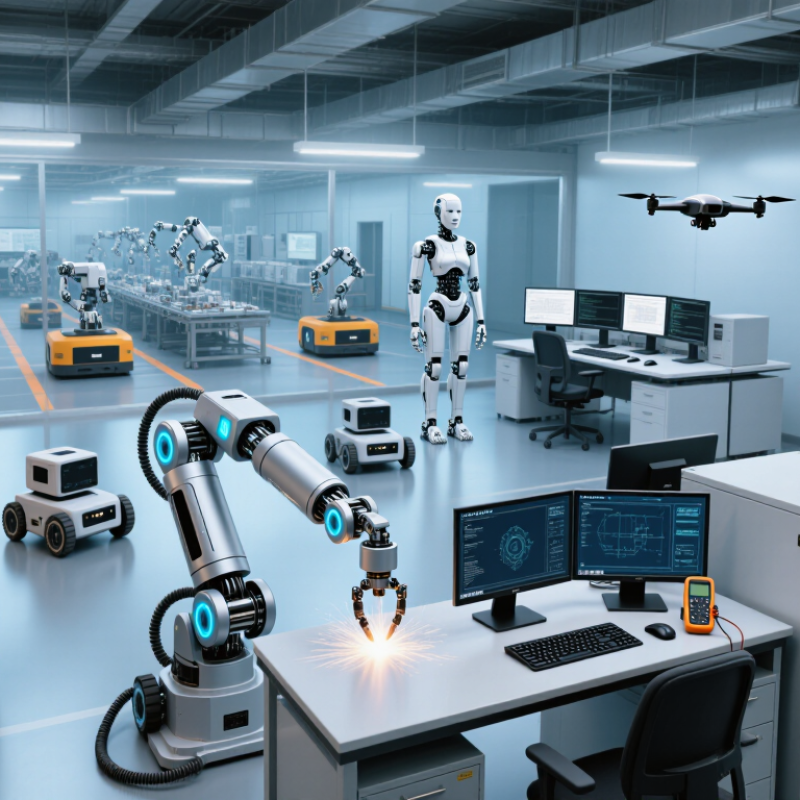
What Are the Top 10 Robotics Careers?

Robotics Industry Scope: 541,000 Industrial Robots Installed in 2023 (IFR)

The robotics industry is expanding from factory floors into logistics, healthcare, agriculture, and public infrastructure. The International Federation of Robotics reported 541,000 industrial robots installed worldwide in 2023. That figure shows strong demand for people who can design, operate, maintain, and improve automated systems.

The top ten robotics careers cover several specialties. Robotics engineers build machines and test their movement. Automation engineers connect robots with production equipment. Mechanical engineers design frames, joints, and grippers. Electrical engineers manage motors, sensors, and power systems. Controls engineers tune motion and reduce errors. Software developers create reliable robot instructions. Artificial intelligence and computer vision specialists help machines recognize objects. Systems integrators connect complete work cells. Robotics technicians inspect equipment and solve failures on site. Safety engineers assess risks before workers share a workspace with machines.

Practical experience still matters. A technician may spend hours tracing one loose cable. A software specialist may correct a tiny timing error. Small faults can stop an entire production line. Training should include programming, electrical testing, mechanical repair, and workplace safety. Industry data offers a useful direction, but it does not guarantee every career will grow equally. Some roles may change faster than schools can update their courses. That gap deserves attention. Human judgment remains necessary when robots meet unusual materials, poor lighting, or unexpected production changes.

What Are the Top 10 Robotics Careers?

Robotics Industry Scope: 541,302 Industrial Robots Installed in 2023

Global industrial robot installations increased from approximately 373,000 units in 2019 to 541,302 units in 2023. This sustained demand supports career opportunities in robotics engineering, automation, controls, software development, artificial intelligence, maintenance, systems integration, safety, research, and technical operations.

Source: International Federation of Robotics (IFR), World Robotics reports. Earlier annual figures are rounded.

The Top 10 Robotics Careers Classified by Duties, Skills, and Education

What Are the Top 10 Robotics Careers?

The Top 10 Robotics Careers Classified by Duties, Skills, and Education

Robotics engineers design machines that sense, move, and respond. Their duties include testing prototypes, improving motion, and documenting failures. A bachelor’s degree in robotics, mechanical engineering, or a related field is common. They need programming, electronics, and practical troubleshooting skills.

Automation engineers

Automation engineers connect robotic equipment with production processes. Controls engineers tune motors, sensors, and feedback systems. Mechanical design engineers create frames, joints, and grippers using computer-aided design tools.

Electrical engineers

Electrical engineers develop wiring, power systems, and circuit protection. These roles usually require engineering degrees, mathematics, and careful laboratory testing. Small errors matter.

Software engineers

Software engineers write motion, vision, and planning programs. They need strong coding skills and patience with unpredictable hardware.

Robot technicians

Robot technicians install equipment, replace components, and diagnose faults on-site. Technical diplomas or associate degrees can provide a useful entry route.

Systems integrators

Systems integrators combine robots, conveyors, sensors, and safety devices into one working cell. They need broad knowledge and hands-on experience.

Safety engineers

Safety engineers assess risks, guarding, emergency controls, and operator procedures. They often study safety engineering or industrial engineering and follow recognized workplace standards.

Research scientists

Research scientists explore new materials, learning methods, and human-robot interaction. Advanced degrees are normally expected.

In practice, job titles overlap, and education alone cannot replace supervised experience. I have found that a promising design may still fail after dust, vibration, or rushed maintenance expose its weak assumptions.

Design Careers: Robotics, Mechanical, Electrical, and Controls Engineers

Robotics design careers are moving beyond simple machine construction. Robotics engineers combine mechanisms, sensors, software interfaces, and safety requirements. Mechanical engineers shape joints, frames, grippers, and moving assemblies. A misplaced hole can create hours of rework. Electrical engineers design power systems, wiring, sensors, and communication circuits. Controls engineers make motion predictable through feedback, tuning, and testing.

The International Federation of Robotics reported 541,302 industrial robots were installed worldwide in 2023. That expanding installed base needs engineers who can improve reliability, not only create prototypes. The U.S. Bureau of Labor Statistics projects 11% employment growth for mechanical engineers from 2023 to 2033. Electrical and electronics engineering jobs are projected to grow 9% during the same period. Robotics remains a cross-disciplinary field, so job titles can be confusing. A controls engineer may spend one day adjusting a motor loop and the next investigating vibration in a physical assembly.

Practical skills matter. A strong candidate can read a tolerance drawing, measure voltage safely, and explain why a robot overshoots its target. The World Economic Forum’s Future of Jobs Report 2025 says 58% of employers expect robotics and autonomous systems to transform business by 2030. That figure signals demand, but it does not guarantee easy employment. Portfolio projects should show test results, failed iterations, and design changes. Perfect demonstrations can look less credible. Real machines behave imperfectly. Engineers must document assumptions, question noisy data, and accept that elegant designs sometimes fail under heat, dust, or repeated loads.

What Are the Top 10 Robotics Careers? — Design Careers: Robotics, Mechanical, Electrical, and Controls Engineers

Rank Robotics Career Primary Responsibility Typical Entry Education Core Technical Skills Closest Occupational Category 2023 U.S. Median Wage Benchmark
1 Robotics Engineer Integrates mechanical structures, electronics, software, sensors, and actuators into complete robotic systems. Bachelor’s degree in robotics, mechanical engineering, electrical engineering, or a related field. System integration, kinematics, dynamics, sensors, actuators, programming, and technical documentation. Mechanical or electrical engineering $99,510–$109,010
2 Mechanical Design Engineer Designs robot frames, joints, gear systems, end-effectors, housings, and mechanisms for strength and motion. Bachelor’s degree in mechanical engineering or mechanical engineering technology. Computer-aided design, tolerance analysis, materials, manufacturing processes, and finite-element analysis. Mechanical engineers $99,510
3 Electrical Engineer Develops power distribution, motor-drive circuits, wiring, safety systems, and electronic hardware for robots. Bachelor’s degree in electrical or electronics engineering. Circuit design, power electronics, motor control, signal conditioning, testing, and electrical safety. Electrical and electronics engineers $109,010
4 Controls Engineer Creates the feedback and motion-control systems that enable robots to move accurately, safely, and repeatably. Bachelor’s degree in electrical, mechanical, control, or systems engineering. Feedback control, motion planning, system modeling, industrial networks, sensors, and real-time systems. Electrical or mechanical engineers $99,510–$109,010
5 Robotics Software Engineer Builds software for robot perception, planning, navigation, task execution, simulation, and data processing. Bachelor’s degree in computer science, software engineering, robotics, or electrical engineering. Algorithms, data structures, robotics middleware, simulation, software testing, and real-time programming. Software developers $132,270
6 Computer Vision Engineer Enables robots to interpret cameras and other sensing systems for identification, measurement, inspection, and navigation. Bachelor’s or master’s degree in computer science, electrical engineering, robotics, or computer vision. Image processing, three-dimensional perception, machine learning, calibration, object detection, and sensor fusion. Computer and information research scientists $145,080
7 Embedded Systems Engineer Develops the low-level computing, firmware, and communication functions inside robotic devices. Bachelor’s degree in computer engineering, electrical engineering, or computer science. Embedded programming, microcontrollers, operating systems, communication protocols, debugging, and hardware interfaces. Computer hardware engineers $138,110
8 Systems Engineer Defines requirements and coordinates mechanical, electrical, software, safety, verification, and lifecycle activities. Bachelor’s degree in systems, mechanical, electrical, or aerospace engineering. Requirements management, architecture, risk analysis, verification, validation, interface control, and project planning. Industrial engineers $99,380
9 Automation Engineer Designs automated production, inspection, material-handling, and process-control systems that use robotic equipment. Bachelor’s degree in electrical, mechanical, industrial, or automation engineering. Process control, machine safety, system integration, production analysis, sensors, and automated testing. Industrial engineers $99,380
10 Robotics Technician Builds, installs, calibrates, maintains, troubleshoots, and tests robotic equipment under engineering guidance. Associate degree or postsecondary certificate in robotics, electronics, mechatronics, or electromechanical technology. Electrical testing, mechanical assembly, calibration, preventive maintenance, wiring, diagnostics, and technical reading. Electrical and electronic engineering technologists and technicians Approximately $70,000
Wage figures are 2023 U.S. median annual benchmarks for the closest occupational categories reported by the U.S. Bureau of Labor Statistics; robotics-specific job titles are not always reported as separate occupations, so actual compensation varies by location, experience, education, industry, and responsibilities.

AI Careers: Software Developers, AI Researchers, and Data Scientists

Robotics careers increasingly depend on artificial intelligence, not only mechanical design. Software developers build motion systems, simulation tools, and safe control interfaces. The U.S. Bureau of Labor Statistics projects 17% growth for software developer jobs from 2023 to 2033. These professionals often test code beside a physical robot, where one faulty line can produce a sudden movement. Practical debugging skills matter.

AI researchers create learning methods for perception, planning, and human-robot interaction. The same agency projects 26% growth for computer and information research scientists during that period. Data scientists support these systems by cleaning sensor logs, measuring model errors, and detecting unusual behavior. Their field has an even stronger forecast: 36% growth from 2023 to 2033. The work is less glamorous than demonstrations. It may involve labeling thousands of imperfect images.

The Stanford AI Index Report 2025 recorded sharp growth in AI investment and industrial adoption, while the World Economic Forum’s Future of Jobs Report 2025 identified AI, big data, and analytical thinking among the fastest-rising workplace skills. These figures show opportunity, but they do not guarantee a job. I would not treat forecasts as promises. Robotics teams still need engineers who understand uncertainty, privacy, testing, and real operating conditions. A polished model can fail under weak lighting. Small errors matter. Candidates gain credibility by documenting experiments, explaining limitations, and validating results on unfamiliar data.

Deployment Careers: Technicians, Safety Specialists, and Product Managers (BLS Data)

What Are the Top 10 Robotics Careers? Deployment Careers: Technicians, Safety Specialists, and Product Managers (BLS Data)

Robotics deployment careers turn prototypes into dependable tools on real work floors. Technicians install sensors, calibrate motors, inspect cables, and diagnose faults during active shifts. Their work often aligns with BLS categories such as electro-mechanical technicians and industrial machinery mechanics. Employers usually value electrical knowledge, mechanical accuracy, and calm troubleshooting under time pressure. A loose connector can stop an entire production cell.

Safety specialists examine more than the robot itself. They review machine guarding, emergency stops, worker movement, training records, and maintenance procedures. BLS data tracks occupational health and safety specialists and technicians, rather than a separate robotics occupation. This distinction matters. Job titles can sound precise while hiding different responsibilities. A specialist may spend one hour measuring noise and another observing how workers approach a moving arm.

Product managers connect customer needs with engineering limits, deployment schedules, and measurable outcomes. BLS does not list “robotics product manager” as one standalone occupation. Related management and project roles provide useful comparisons, but they cannot predict every robotics salary or opening. Strong candidates understand workflow details, ask uncomfortable questions, and explain technical tradeoffs clearly. The role is less glamorous than expected. A failed pilot, unclear requirement, or rushed training plan can reveal weaknesses that no spreadsheet anticipated.