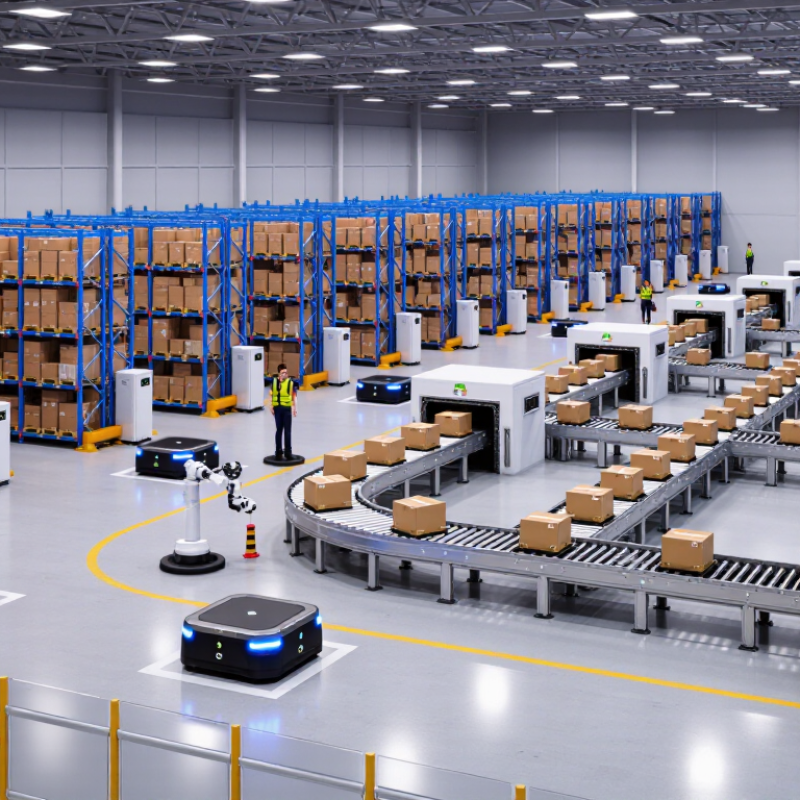
| Automated Storage and Retrieval System (AS/RS) |
High-volume storage and retrieval of pallets, cartons, totes, or bins where space utilization and repeatable throughput are priorities. |
High-density storage; fixed travel paths; suitable for stable SKU dimensions, predictable inventory policies, and controlled operating environments. |
Approximately 9–18 months, including design, permitting, equipment fabrication, installation, testing, and ramp-up. |
1. Validate SKU and order profiles.
2. Survey building structure, floor loading, fire protection, and clear height.
3. Model storage capacity and peak throughput.
4. Complete detailed engineering and safety review.
5. Install, test, train, and phase the go-live.
|
Warehouse management system; warehouse control or execution layer; inventory master data; barcode or RFID identification; conveyor interfaces; safety PLCs; order and replenishment APIs. |
Reduces travel-intensive put-away and retrieval work. Retains demand for control-room operators, maintenance technicians, inventory specialists, and exception handlers. Plan structured technical training before commissioning. |
High |
Storage density; retrieval cycle time; system availability; inventory accuracy; order cut-off compliance; energy consumption per handled unit. |
Building constraints, inaccurate master data, and insufficient peak-capacity allowance. Control through 3D layout validation, data cleansing, redundancy planning, and peak-period stress testing. |
| Autonomous Mobile Robots (AMRs) |
Flexible movement of totes, cartons, shelves, or pallets between storage, picking, packing, and replenishment zones. |
Dynamic routing; scalable fleet size; useful for brownfield facilities and changing order profiles. Performance depends on aisle layout, traffic rules, battery management, and floor quality. |
Approximately 3–9 months for a defined zone; larger multi-zone deployments may require 9–15 months. |
1. Map travel paths and pedestrian interactions.
2. Establish baseline travel time and order volume.
3. Pilot a representative zone.
4. Configure traffic, charging, and fleet rules.
5. Expand by wave after safety and throughput validation.
|
Warehouse management or execution system; fleet manager; location maps; task APIs; barcode scanning; charging infrastructure; wireless network coverage; safety controls and emergency-stop systems. |
Shifts labor from walking and pushing to picking, replenishment, exception handling, fleet supervision, and basic robot support. Cross-train associates to respond to blocked paths, misreads, and battery exceptions. |
Medium |
Units moved per labor hour; robot utilization; travel reduction; mission completion rate; charging availability; blocked-route frequency. |
Congestion, weak wireless coverage, and poor pedestrian discipline. Control through traffic simulation, network surveys, marked walkways, speed limits, and phased fleet growth. |
| Conveyor and Sortation System |
High-volume transfer and routing of cartons, totes, parcels, or cases between receiving, storage, picking, packing, and shipping. |
High repeatability and continuous flow; strongest fit where product dimensions and destination logic are relatively stable. |
Approximately 6–12 months, depending on building modifications, conveyor length, sortation type, and integration scope. |
1. Capture carton dimensions, weights, and destination rules.
2. Define accumulation, merge, divert, and reject logic.
3. Complete layout, structural, and fire-safety reviews.
4. Install controls and mechanical equipment.
5. Run dry tests, product tests, and peak-volume trials.
|
Warehouse control system; barcode scanners; dimensioning and weighing devices; programmable logic controllers; shipping and order systems; printer interfaces; real-time status messaging. |
Reduces manual transport and sorting. Requires line attendants, quality checkers, jam-clearance personnel, controls technicians, and preventive-maintenance coverage across operating shifts. |
Medium |
Divert accuracy; cartons per hour; jam rate; conveyor availability; reject percentage; dock-to-stock and pick-to-ship cycle time. |
Incorrect labels, accumulation failures, and single-point equipment faults. Control with scan verification, bypass lanes, spare parts, preventive maintenance, and manual recovery procedures. |
| Goods-to-Person Picking |
Piece-picking operations with many order lines, high walking content, and a requirement for consistent picking ergonomics. |
Inventory is delivered to stationary operators through totes, bins, shuttles, or vertical storage modules. Works best with standardized containers and disciplined slotting. |
Approximately 6–12 months, including ergonomic design, workstation configuration, integration, and ramp-up. |
1. Segment SKUs by velocity, size, and handling characteristics.
2. Design workstation ergonomics and replenishment rules.
3. Configure batching, sequencing, and order prioritization.
4. Pilot with representative fast- and slow-moving items.
5. Measure quality and throughput before scaling.
|
Warehouse management or execution system; item and container master data; pick confirmation; replenishment logic; put-wall or packing interfaces; barcode or vision verification; ergonomic workstation controls. |
Can increase picking productivity while reducing walking. Staffing shifts toward station operators, replenishment associates, exception handlers, and technical support. Plan regular rotation to manage repetitive work. |
Medium |
Lines per labor hour; pick accuracy; station utilization; replenishment response time; order cycle time; ergonomic incident rate. |
Poor slotting, station imbalance, and replenishment starvation. Control through velocity-based slotting, workload balancing, visual alerts, and scheduled replenishment windows. |
| Automated Palletizing and Depalletizing |
Repetitive case handling at receiving, production, storage, or shipping points with consistent case dimensions and pallet patterns. |
High repeatability; suitable for stable product families and defined pallet configurations. Requires controlled pallet quality and clear access for maintenance. |
Approximately 4–9 months for a standard cell; longer when multiple lines, custom grippers, or complex pallet patterns are required. |
1. Test cases, loads, labels, and pallet conditions.
2. Select gripper and confirm product compatibility.
3. Validate pallet patterns and load stability.
4. Install guarding, scanners, and safety controls.
5. Conduct acceptance testing at normal and peak rates.
|
Production, warehouse, or transportation system; pallet pattern data; line controls; safety PLC; barcode or vision system; stretch-wrapper and labeler interfaces; equipment status signals. |
Reduces heavy and repetitive lifting. Retains roles for cell operators, pallet-quality inspectors, material replenishment staff, maintenance technicians, and safety observers during ramp-up. |
Medium |
Cases per hour; pallet stability; placement accuracy; changeover time; equipment availability; manual-lift reduction. |
Unstable loads, damaged cases, and gripper failures. Control through load testing, pallet-quality standards, changeover procedures, and spare-gripper availability. |
| Automated Guided Vehicles (AGVs) |
Predictable pallet or container transport along defined routes between receiving, storage, production, and dispatch areas. |
Structured navigation and repeatable routes; effective where traffic patterns and material flows are stable and floor markings or navigation references can be maintained. |
Approximately 6–12 months, including route design, infrastructure preparation, safety validation, and operational ramp-up. |
1. Document origin-destination demand.
2. Define routes, crossing points, and staging zones.
3. Validate floor condition, rack interfaces, and clearances.
4. Install navigation references, chargers, and safety devices.
5. Test normal, blocked-route, and emergency scenarios.
|
Material-flow or warehouse execution system; vehicle-management software; location mapping; traffic-control logic; charging management; barcode or RFID identification; safety sensors. |
Reduces forklift travel in selected flows. Requires vehicle coordinators, charging and battery procedures, maintenance coverage, pedestrian-awareness training, and qualified exception handlers. |
Medium |
Transport missions per hour; fleet availability; route adherence; waiting time; battery utilization; manual transport reduction. |
Route obstruction, mixed-traffic incidents, and insufficient charging capacity. Control with segregated lanes, traffic rules, charging simulation, and safety audits. |
| Robotic Piece Picking and Vision-Assisted Handling |
High-volume picking or depacking of products with sufficient visual and mechanical consistency for automated recognition and grasping. |
Best for repeatable items with validated packaging, stable presentation, and acceptable exception rates. Irregular, reflective, soft, or deformable items may require human support. |
Approximately 6–15 months, including sample testing, gripper development, training, integration, and production ramp-up. |
1. Collect representative product samples.
2. Test recognition, grasping, and placement rates.
3. Define human-in-the-loop exception procedures.
4. Integrate cell controls and quality checks.
5. Ramp gradually while monitoring error patterns.
|
Warehouse execution system; vision and item libraries; robot-cell controller; conveyor or presentation equipment; quality inspection logic; safety systems; exception and rework workflows. |
Reduces repetitive picking tasks but does not eliminate human support. Plan robot-cell operators, exception handlers, quality auditors, maintenance specialists, and data personnel for ongoing item-library updates. |
High |
Successful grasp rate; pick accuracy; cycle time; exception percentage; cell availability; item-library coverage. |
Product variability and model degradation caused by packaging changes. Control with sample-based validation, change-control procedures, exception buffers, and continuous performance monitoring. |
| Warehouse Execution and Orchestration Layer |
Multi-automation environments requiring coordinated task allocation, equipment monitoring, order sequencing, and exception management. |
Acts as an operational coordination layer between business systems and automation controls. Particularly useful for sites combining different equipment types or operating multiple process zones. |
Approximately 4–10 months for software-led implementation; longer when data, interfaces, and operational processes require redesign. |
1. Map current and future-state processes.
2. Define system-of-record ownership for inventory and tasks.
3. Standardize equipment messages and exception codes.
4. Configure dashboards, alerts, and recovery workflows.
5. Test end-to-end scenarios and conduct operator training.
|
Enterprise resource planning and order systems; warehouse management system; equipment-control interfaces; APIs or message queues; identity and access management; event logging; cybersecurity monitoring. |
Creates demand for control-room coordinators, system super-users, data-quality analysts, integration support, and process engineers. Workforce plans should include coverage for software incidents and manual fallback operations. |
High |
Task release latency; end-to-end order cycle time; exception resolution time; interface availability; inventory synchronization accuracy; manual fallback frequency. |
Unclear system ownership, interface failures, and poor exception design. Control with interface contracts, master-data governance, monitoring, documented recovery procedures, and disaster-recovery tests. |
| Automated Packing and Dimensioning |
Order packing, carton selection, void reduction, weighing, labeling, and shipment verification in parcel-heavy operations. |
Most effective where order profiles, packaging materials, and carrier rules can be standardized. Benefits from accurate product dimensions and weight data. |
Approximately 4–9 months for a defined packing line; integration with shipping systems may extend the timeline. |
1. Analyze order cube, product fragility, and packaging demand.
2. Define cartonization and dunnage rules.
3. Test packing quality and carrier compliance.
4. Integrate weighing, labeling, and manifesting.
5. Run quality audits during the ramp-up period.
|
Order management; warehouse execution system; cartonization logic; scales; dimensioners; print-and-apply labels; carrier and manifest interfaces; image or scan verification. |
Reduces repetitive packing actions while increasing demand for quality verification, replenishment, exception handling, and equipment maintenance. Train staff on packaging-material changes and carrier compliance. |
Medium |
Packages per hour; carton utilization; shipping-label accuracy; damage rate; material consumption; manifest accuracy. |
Incorrect product dimensions, packaging jams, and label failures. Control through master-data audits, material specifications, redundant label checks, and manual bypass capability. |