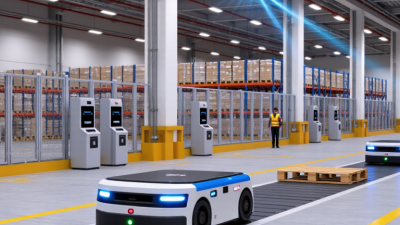
China Top 10 Automated Guided Vehicle System Suppliers
China’s automated guided vehicle system market is expanding beyond simple warehouse transport. Chinese suppliers now develop pallet movers, towing vehicles, shelf-to-person robots, and flexible mobile platforms. Their systems serve factories, distribution centers, hospitals, and cold-chain facilities.
Mick Mountz, founder of Kiva Systems, once described the warehouse vision this way: “We wanted to make the warehouse a more human-friendly place.” That idea remains relevant in China. A practical automated guided vehicle system should reduce walking, improve material flow, and support safer daily work. It should not merely look advanced in a product video.
This overview examines China’s top 10 automated guided vehicle system suppliers through useful business and engineering criteria. These include navigation accuracy, payload capacity, fleet management, battery charging, software integration, and after-sales support. We also consider whether a supplier can connect vehicles with warehouse management systems and production lines.
Small details matter. A vehicle passing beneath a pallet rack needs reliable obstacle detection. A busy factory floor needs stable routing around workers and forklifts. A cold warehouse needs batteries and sensors that perform under difficult conditions.
The ranking is not absolute. Market data changes, and supplier strengths are uneven. Some companies excel in manufacturing, while others provide stronger software or overseas service. That difference deserves attention.
Readers should compare demonstrations with real operating requirements. Request site references. Test emergency stops. Check maintenance response times.
A polished brochure is not enough.
This guide aims to provide a balanced starting point for buyers, engineers, and logistics managers evaluating China’s leading suppliers.
Automated Guided Vehicle Systems: Definition and Main Functions
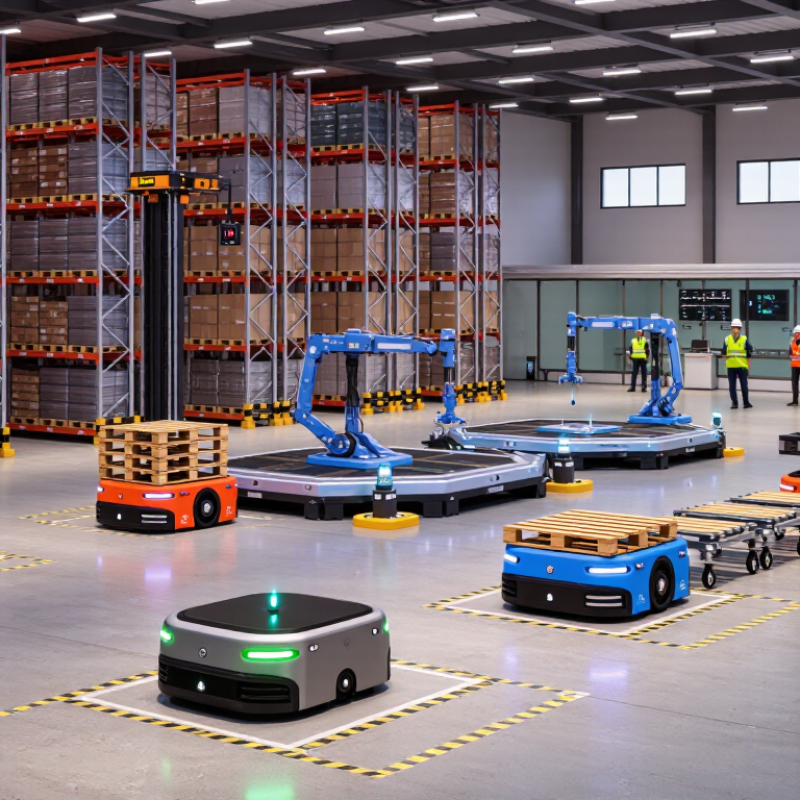
Automated Guided Vehicle systems are mobile machines that move materials without a human driver. They follow mapped routes, floor markers, magnetic paths, or digital navigation signals. In a warehouse, an AGV can carry cartons from storage racks to packing stations. It can also transport pallets between production areas. The system usually combines vehicles, software, sensors, charging equipment, and traffic controls.
The main functions are clear. AGVs reduce repetitive lifting, improve route consistency, and support scheduled material delivery. Sensors detect people, obstacles, and unexpected changes. The control platform assigns tasks and monitors vehicle locations. In practical operations, this can shorten waiting time near workstations. However, performance depends on accurate maps, stable network connections, and disciplined floor management. A blocked aisle can stop several vehicles. That detail is easy to underestimate. Human supervision still matters, especially during layout changes or unusual loads.
Tips: Measure traffic patterns before selecting an AGV system. Check load weight, turning space, floor quality, and charging access. Keep emergency paths open. Test one route first, then expand carefully. Review failed deliveries instead of hiding them. A system may appear efficient while creating delays at handover points. Operators should receive practical training, not only software instructions. Regular sensor checks and route updates also protect reliability. Some sites need more manual flexibility than expected. That is worth reassessing.
Automated Guided Vehicle Systems: Representative Payload Classes
Automated Guided Vehicles (AGVs) are mobile robots that transport materials along predefined routes or digitally controlled paths. Their main functions include navigation, localization, obstacle detection, task execution, fleet coordination, battery management, and safety monitoring. The chart presents representative payload classes commonly specified for industrial AGV applications; it is not a supplier ranking or market-share comparison.
China’s AGV Industry: Market Structure and Development
China’s AGV industry is shaped by factory automation, warehouse expansion, and demand for safer material handling. The market includes vehicle manufacturers, navigation and control-system providers, integrators, and service teams. They compete on payload, positioning accuracy, fleet coordination, and how smoothly systems connect with existing equipment. Deployment is rarely plug-and-play. A narrow aisle, uneven floor, or changing pallet layout can disrupt a carefully planned route.
The International Federation of Robotics reported 290,258 industrial robot installations in China in 2022, about 52% of global installations, in its World Robotics 2023 report. This figure covers industrial robots, not AGVs, but signals the scale of China’s wider automation ecosystem.
AGV adoption is also moving beyond fixed, repetitive routes toward more flexible fleet operations. Growth is uneven. Smaller facilities may struggle to justify integration costs, while mixed vehicle fleets can complicate dispatching and maintenance. One overlooked issue: software updates and staff training need ongoing budgets, not just a launch-day plan. Industry estimates should be read carefully, since some reports group AGVs and autonomous mobile robots together.
Selection Criteria for Ranking the Top 10 AGV Suppliers
A credible ranking of the top 10 automated guided vehicle system suppliers should begin with evidence, not marketing claims. The International Federation of Robotics reported more than 113,000 professional service robots sold for transport and logistics tasks in 2023. This growth makes supplier comparison more demanding. Our selection criteria therefore examine proven deployments, system reliability, and measurable operational results.
We assess navigation accuracy, payload capacity, charging efficiency, fleet-management software, and integration with warehouse systems. Safety also carries major weight. Compliance with ISO 3691-4, documented risk assessments, emergency-stop performance, and obstacle detection should be verified during site testing. Supplier experience matters too. We review completed projects in similar environments, including narrow aisles, mixed pedestrian traffic, cold storage, and uneven flooring. Service response time, spare-parts access, cybersecurity controls, and training quality influence the final score. Total cost of ownership is considered, not only the purchase price. No ranking is perfectly neutral. Customer data can also be incomplete.
Tips: Request a live demonstration with your own pallet sizes, routes, and traffic conditions. Ask for uptime records covering at least twelve months. Check whether software updates require downtime. A polished demo proves little.
IFR data supports market relevance, but market share alone cannot determine quality. A smaller supplier may offer stronger engineering support or faster customization. We therefore combine public technical documentation, customer references, safety evidence, and practical testing. Scores should be reviewed annually because software, regulations, and warehouse demands change quickly.
China Top 10 Automated Guided Vehicle System Suppliers - Selection Criteria for Ranking the Top 10 AGV Suppliers
Suggested evaluation framework. Apply each criterion consistently and verify claims with documented evidence; the weighted score is a comparison method, not a published ranking of named suppliers.
| Rank | Evaluation Criterion | Weight | What to Evaluate | Suggested Verification Evidence |
|---|---|---|---|---|
| 1 | Application and vehicle fit | 15% | Suitability of vehicle types and configurations for the required payload, load dimensions, travel paths, floor conditions, and operating environment. | Vehicle specifications, application references, site assessment, and a documented solution proposal. |
| 2 | Navigation and localization | 13% | Navigation methods offered, localization performance, route flexibility, and robustness around people, equipment, and changing layouts. | Technical documentation and demonstrations in representative site conditions; check claimed accuracy against specified test conditions. |
| 3 | Fleet management and traffic control | 12% | Fleet task assignment, traffic coordination, route and intersection management, charging coordination, and recovery from blocked routes or vehicle faults. | Live software demonstration, system architecture, operational scenarios, and stated fleet or traffic limits. |
| 4 | Safety and compliance | 12% | Risk assessment, personnel detection, protective stopping, emergency stops, warning devices, safety functions, and alignment with applicable regulations and standards. | Risk assessment, safety-function documentation, test records, and relevant conformity documents for the proposed configuration and destination market. |
| 5 | System integration and interoperability | 11% | Ability to integrate with warehouse or manufacturing systems, material-handling equipment, doors, lifts, conveyors, and existing networks. | Interface specifications, supported protocols, integration responsibilities, and evidence from comparable deployments. |
| 6 | Reliability and maintainability | 10% | Documented reliability, diagnostics, preventive-maintenance requirements, spare-parts availability, and ease of troubleshooting. | Service and maintenance records, recommended maintenance schedule, parts list, and clearly defined warranty terms. |
| 7 | Implementation and commissioning capability | 8% | Project planning, site readiness review, installation, testing, commissioning, operator training, and change-management support. | Project plan, acceptance-test criteria, training plan, and named responsibilities for supplier and customer teams. |
| 8 | After-sales service and technical support | 8% | Support coverage, response and escalation processes, remote diagnostics, local service resources, and availability of technical documentation. | Service-level terms, support contact process, service-location details, and documented response commitments. |
| 9 | Total cost of ownership | 6% | Whole-life cost, including vehicles, software, integration, infrastructure, batteries or charging, maintenance, training, and support. | Itemized quotation, stated assumptions, licensing terms, recurring charges, and a lifecycle-cost estimate. |
| 10 | Scalability and upgrade path | 5% | Ability to expand vehicle fleets, add workflows or sites, and update software without disproportionate disruption or replacement. | Expansion architecture, software-update policy, capacity assumptions, and roadmap or upgrade documentation. |
| Total weighting | 100% | Score each criterion using the same evidence standard for every candidate. | ||
Scoring suggestion: rate each criterion from 1 (does not meet requirements) to 5 (strongly meets requirements), multiply by its weighting, and compare the resulting totals. Validate safety, performance, and compliance claims for the specific system configuration and intended market.
Profiles of China’s Top 10 AGV System Suppliers
China Top 10 Automated Guided Vehicle System Suppliers
China’s leading AGV system suppliers differ in engineering depth, delivery scale, and application focus. This profile-based review examines ten representative suppliers without relying only on sales claims. The group includes warehouse automation specialists, factory logistics integrators, heavy-load vehicle makers, and developers of laser, vision, and hybrid navigation systems. Some focus on pallet movement. Others build fleets for electronics, automotive, pharmaceuticals, or cold-chain facilities. Their practical strengths appear in fleet scheduling, safety control, battery management, and integration with warehouse management software.
The market context is substantial. IFR’s World Robotics 2024 report recorded 276,288 industrial robot installations in China during 2023, representing more than half of global installations. IFR also reported 470 industrial robots per 10,000 manufacturing employees in China. AGVs are not industrial robots, but these figures show the country’s strong automation base. Interact Analysis has also identified Asia as the largest regional market for mobile robots, supported by warehouse expansion and labor shortages. A neat ranking is tempting, but it can mislead.
Supplier evaluation should include route stability, obstacle recovery, charging time, maintenance response, and documented delivery results. Factory demonstrations matter. A polished dashboard cannot repair weak floor mapping. Public information is sometimes incomplete, especially for project margins and failure rates. Buyers should request customer references, safety records, software interfaces, and performance data under real workloads. The strongest profile may not be the largest supplier. It may be the team that responds before a stopped vehicle blocks the production line.
AGV Technologies, Applications, and Supplier Comparison
China Top 10 Automated Guided Vehicle System Suppliers
China’s AGV sector is expanding with factory automation and smart warehousing. The International Federation of Robotics reported 290,258 industrial robot installations in China during 2022. This figure shows strong automation demand, although robots and AGVs serve different workflows.
AGVs move pallets, bins, and components along defined routes. Common technologies include magnetic guidance, QR navigation, laser scanning, and visual mapping. Each choice affects accuracy, flexibility, maintenance, and floor requirements.
When comparing China’s top ten AGV system suppliers, buyers should examine more than vehicle prices. Payload capacity, positioning tolerance, charging speed, fleet software, and safety functions deserve practical testing.
A warehouse may need 1-ton pallet vehicles, while an electronics line may require compact units under shelving. The China Federation of Logistics and Purchasing reported total social logistics value of 352.4 trillion yuan in 2023. This scale supports demand for scalable warehouse transport systems and stronger integration services.
Application evidence matters. Ask suppliers for route simulations, uptime records, emergency-stop tests, and references from similar facilities. Safety scanners must handle workers, racks, reflective surfaces, and narrow aisles.
Software should connect with warehouse and manufacturing systems without excessive customization. Low-cost hardware can become expensive through weak service coverage. That lesson is often overlooked.
Supplier rankings also change by application, region, and deployment maturity. A technically impressive vehicle may still fail when battery management, traffic control, or operator training receives insufficient attention.
Related Posts
-
What Is an Automated Guided Vehicle System?
-
How to Choose the Right AGV Robot for Your Business?
-
Understanding the Future of Logistics with Advanced AGV Systems in Modern Warehousing
-

Best AMR Automated Mobile Robot Applications and Benefits?
-
How to Optimize Your AGV System for Maximum Efficiency?
-
Top Tips for Choosing the Right AGV Robot for Your Business?