
What Are Material Handling Robots and How Do They Work?
Material handling robots are changing how warehouses move, store, and sort goods. They transport pallets, cartons, totes, and bins through busy facilities. Some follow mapped routes, while others use cameras, lidar, and software to navigate independently. Robotic arms can also pick products, stack cases, and load conveyors. The movement looks simple. The coordination is not.
The International Federation of Robotics reported 541,302 industrial robot installations worldwide in 2023. Meanwhile, the 2024 MHI Annual Industry Report found that 67% of supply chain leaders planned to adopt robotics and automation within five years. These figures show strong momentum, but they do not guarantee success. A poorly mapped aisle, unstable pallet, or weak warehouse-management-system connection can stop an impressive machine quickly.
Jeff Burnstein, president of the Association for Advancing Automation, has said, “Robots are not taking jobs; they are changing jobs.” That idea helps explain the practical role of material handling robots. They can handle repetitive travel, lifting, scanning, and sorting. Human workers can then focus on exceptions, maintenance, quality checks, and decisions requiring judgment. Still, this balance needs careful design. Robots are tools, not magic.
This guide explains the main robot types, their sensors, navigation methods, control software, and workplace applications. It also examines safety, integration, costs, and operational limits. The most useful system is not always the fastest one. It is the system that works reliably beside people, during real shifts, with real congestion and imperfect data.
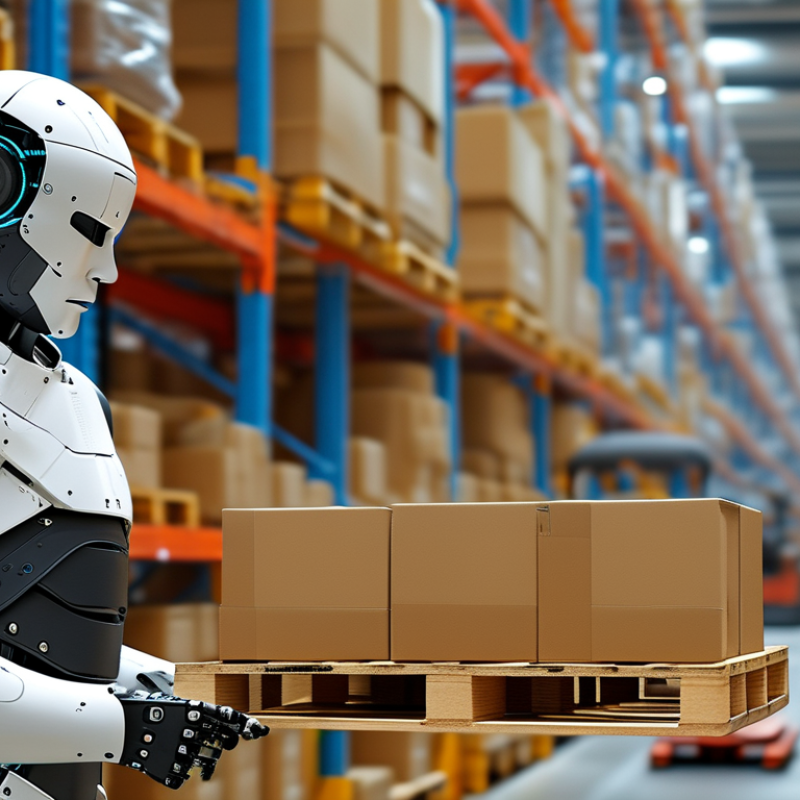
Definition and Purpose of Material Handling Robots
What Are Material Handling Robots and How Do They Work?
Definition and Purpose of Material Handling Robots
Material handling robots are machines that move, lift, sort, or position goods inside warehouses and factories. Their purpose is practical: reduce walking, improve consistency, and support safer material flow. Some travel independently with sensors and digital maps. Others use robotic arms to pick cartons from a conveyor or pallet.
A typical system combines cameras, laser sensors, motors, and warehouse software. The software assigns a task, such as moving a tote to a packing station. Sensors then detect people, racks, and unexpected obstacles. The robot slows down or stops when conditions change. Small details matter. A misplaced pallet can disrupt the entire route.
The scale of automation is growing. The International Federation of Robotics reported 541,302 industrial robots installed worldwide in 2023, with more than 4.28 million operating globally. This figure includes many applications beyond material handling, but it shows the expanding industrial base for robotic systems. The MHI 2024 Annual Industry Report also found that 43% of supply chain professionals were already using artificial intelligence, while many expected adoption to rise sharply within five years.
The numbers are encouraging.
However, automation is not automatically efficient. Poor data, uneven floors, or unclear safety procedures can reduce performance. Human oversight remains necessary, especially when product shapes, traffic patterns, or storage rules change. A robot can repeat a process perfectly. It cannot repair a badly designed process by itself.
What Are Material Handling Robots and How Do They Work? - Definition and Purpose of Material Handling Robots
| Robot Type | Definition and Primary Purpose | Typical Payload | How It Works | Navigation or Control Method | Typical Operating Speed | Common Material Handling Tasks | Typical Operating Environment | Key Advantages |
|---|---|---|---|---|---|---|---|---|
| Automated Guided Vehicle (AGV) | Mobile equipment designed to transport materials along predefined routes between workstations, storage areas, and loading points. | Approximately 500–2,000 kg | Receives a transport mission, follows a fixed route, stops at designated locations, and uses sensors to detect obstacles and confirm positioning. | Magnetic tape, embedded wires, reflectors, QR codes, or other fixed guidance systems. | Approximately 0.8–2.0 m/s | Pallet transportLine feedingTugging carts | Structured warehouses, factories, and distribution centers with stable layouts. | Predictable routing, repeatable transport, and reliable movement of heavy loads. |
| Autonomous Mobile Robot (AMR) | Mobile robot that transports goods while selecting or adjusting routes dynamically instead of relying exclusively on fixed paths. | Approximately 100–1,500 kg | Combines onboard sensors, mapping, localization, and fleet software to identify destinations, avoid obstacles, and reroute when conditions change. | Laser scanning, cameras, inertial sensors, wheel encoders, and digital maps. | Approximately 0.5–2.0 m/s | Order movementCart transportKittingPallet movement | Dynamic warehouses, fulfillment areas, hospitals, and production facilities. | Flexible deployment, reduced fixed infrastructure, and improved adaptability to changing workflows. |
| Robotic Palletizer | Industrial robotic system that stacks cases, cartons, bags, or containers onto pallets according to a programmed pattern. | Approximately 20–1,500 kg per palletizing cycle, depending on configuration | A robotic arm receives product-location data, grips or lifts the load, and places it in a programmed layer pattern. | Programmed motion paths, position sensors, machine vision, and programmable logic controllers. | Approximately 4–15 cycles per minute | Case stackingLayer formationPallet building | End-of-line packaging, food and beverage, consumer goods, and industrial production. | Consistent stacking quality, reduced repetitive lifting, and improved end-of-line throughput. |
| Robotic Depalletizer | Robot that removes cases, containers, or layers from pallets and transfers them to conveyors or production lines. | Approximately 10–500 kg per load, depending on the product and gripper | The system identifies the next item or layer, grips it with a suitable end effector, and places it at a specified discharge point. | Programmed positioning, photoelectric sensors, machine vision, and conveyor controls. | Approximately 3–12 cycles per minute | Pallet unloadingCase transferProduction feeding | Receiving areas, packaging lines, manufacturing plants, and distribution centers. | Reduces manual unloading, supports consistent product flow, and handles repetitive work. |
| Robotic Picking and Packing System | Automated system that identifies, selects, sorts, and places individual items or cases into orders, totes, or shipping containers. | Approximately 0.1–25 kg per item | Vision or sensing systems locate the item, software determines the grasp point, and a robotic arm transfers it to the assigned container. | Machine vision, barcode or dimension data, force sensing, and warehouse control software. | Approximately 300–1,200 picks per hour, depending on item mix and layout | Piece pickingSortingOrder packingKitting | E-commerce fulfillment, distribution centers, retail warehouses, and light manufacturing. | High repeatability, improved order accuracy, and reduced exposure to repetitive handling. |
| Automated Storage and Retrieval Robot | Robot used to place, store, retrieve, and present totes, bins, cartons, or pallets within a storage system. | Approximately 30–1,500 kg | Warehouse software assigns a storage location or retrieval task, while the robot moves through storage aisles or racks and confirms the load position. | Rail guidance, shuttle control, barcode identification, position sensors, and warehouse management software. | Approximately 1–5 m/s, depending on the system type | Put-awayRetrievalBuffer storageSequencing | High-density warehouses, spare-parts centers, cold storage, and manufacturing buffers. | Efficient use of vertical space, fast retrieval, and improved inventory control. |
| Collaborative Material Handling Robot | Robot designed to perform handling tasks near people, typically supporting lifting, loading, unloading, or machine-tending activities. | Approximately 3–20 kg at the robot arm, with higher capacities possible for mobile platforms | The robot follows programmed or guided movements and uses force, speed, and proximity monitoring to operate within defined safety limits. | Force sensing, speed monitoring, safety scanners, cameras, and operator-guided programming. | Usually limited by the application and safety assessment | Machine tendingBox handlingPart transfer | Small-batch production, assembly areas, laboratories, and shared workspaces. | Flexible task changes, relatively simple programming, and closer cooperation with workers. |
| Conveyor-Based Robotic Handling Cell | Integrated system that combines conveyors, sensors, robotic arms, and control software to transfer or sort materials continuously. | Approximately 0.1–100 kg per item, depending on the robot and product | Sensors detect product arrival and position; the controller synchronizes conveyor movement with robotic picking, placement, or sorting. | Conveyor encoders, photoelectric sensors, machine vision, and programmable control systems. | Approximately 10–60 items per minute | SortingTransferDivertingPackaging support | Packaging lines, parcel hubs, food processing, and high-volume distribution operations. | Continuous material flow, consistent cycle timing, and high throughput for standardized items. |
Related Posts
-
What is AMR Automation and How Does It Transform Industries?
-
Top 10 Benefits of Material Handling Robots for Your Business Efficiency
-
10 Essential Tips for Mastering AMR Automation Techniques
-
2026 Best AMR Automation Solutions for Global Buyers?
-

Understanding the Future of Logistics with AGV AMR Technology Innovations
-
Why is AGV Technology Revolutionizing Material Handling in Warehousing?