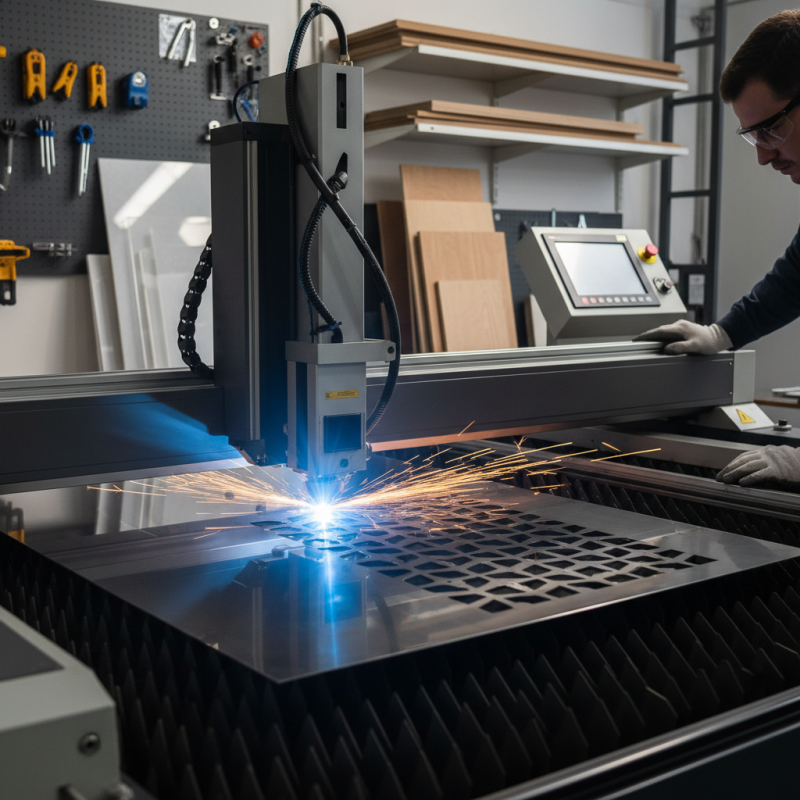
What is a Laser Cutting Machine and How Does It Work?
A laser cutting machine is a remarkable innovation in manufacturing. It uses high-powered lasers to cut materials with precision. This technology has transformed various industries, such as automotive, aerospace, and fashion.
laser cutting machines operate by focusing a laser beam on a specific point. The intense heat from the laser melts or vaporizes the material. This process results in clean and accurate cuts, minimizing waste. The ability to cut different materials, including metal, plastic, and wood, makes it versatile.
Yet, despite its advantages, challenges remain. Operators must ensure safety and proper machine maintenance. Misalignment can lead to imperfections in cuts. Training is essential to maximize the machine's potential. Understanding these elements is crucial for effective use of a laser cutting machine.
What is a Laser Cutting Machine: Definition and Overview
A laser cutting machine is a powerful tool used for precise cutting and engraving in various materials. It utilizes a focused beam of light to slice through materials, creating intricate designs. These machines are widely used in industries like manufacturing, automotive, and even arts and crafts. The process usually involves a computer-controlled system that guides the laser according to detailed designs.
When using a laser cutting machine, it's essential to consider the material's thickness. Some materials may warp or burn when cut improperly. Make sure to adjust the speed and power settings. A miscalculated setting can lead to wasted materials. Keep an eye on the machine’s performance. Odd noises or smoke may indicate an issue that needs immediate attention.
Tip: Always maintain a clean work area. Debris can interfere with cuts. Furthermore, ensure proper ventilation. Laser cutting produces smoke and fumes. This aspect is often overlooked but is crucial for a safe environment. Take the time to reflect on these procedures. Developing good habits can lead to better outcomes in your projects.
The Technology Behind Laser Cutting: Principles of Laser Operations
Laser cutting technology utilizes high-powered lasers to precisely cut materials. It is based on the principle of directing concentrated light to heat and melt the material. The laser beam travels through a lens, focusing its energy onto a small area to create immense heat. This causes the material to vaporize or melt away, allowing for accurate cuts.
One of the remarkable aspects of laser cutting is its versatility. It can process various materials, including metal, wood, and plastic. The thickness and type of material affect cutting speed and quality. The process, however, is not without challenges. Operators must be highly skilled to set appropriate parameters. Incorrect settings can lead to poor cuts or damage to the material.
The quality of the final product largely depends on the laser's focus. A slight misalignment can result in jagged edges or incomplete cuts. Regular maintenance of equipment is crucial for achieving consistent results. Understanding the technology behind laser cutting requires a balance of creativity and precision. Each project presents opportunities for learning and improvement in technique.
Types of Laser Cutting Machines: CO2 vs. Fiber Lasers
Laser cutting machines have transformed manufacturing across various industries. Among them, CO2 and fiber lasers are two prominent types. Each has distinct characteristics, performance metrics, and applications, making them suitable for different tasks.
CO2 lasers are commonly used for cutting and engraving non-metal materials. They excel in processing materials like wood, acrylic, and plastic. Industry reports indicate that CO2 lasers typically offer high precision, with cutting tolerances of up to ±0.1 mm. However, their performance diminishes when working with metals due to lower cutting speeds.
In contrast, fiber lasers are increasingly preferred for metal cutting. They deliver superior speed and efficiency, particularly with stainless steel and aluminum, achieving cutting speeds of up to six times faster than CO2 lasers.
Each type has its pros and cons. The initial investment for fiber lasers can be higher, yet they often have lower operational costs due to energy efficiency. Manufacturers need to assess their specific needs carefully. Ultimately, the choice of laser cutting technology should align with the desired material and production volume. As the market evolves, staying informed about these technologies is essential for making the right investment.
Key Components of a Laser Cutting Machine: Understanding the Setup
A laser cutting machine consists of several critical components that cooperate seamlessly. The laser source generates a focused beam, typically using CO2 or fiber technology. This beam is directed towards the material, where it melts, burns, or vaporizes the designated area. The cutting process can produce clean edges with minimal kerf, often leading to a lower cleanup requirement. An industry report indicates that precision cutting can achieve tolerances of ±0.005 inches, showcasing its accuracy.
The optics system plays a vital role in this setup. Lenses and mirrors guide and focus the laser beam. This arrangement directly influences the quality and speed of the cut. Additionally, the computer numerical control (CNC) system enables precise movement. It allows the machine to follow complex patterns and designs. According to market analysis, the global laser cutting machine market is projected to grow at a CAGR of 5.5% over the next five years.
Despite its advantages, the laser cutting process can also present challenges. For example, the need for regular maintenance is critical. Lens cleaning and alignment can affect performance and quality. Moreover, different materials react uniquely to laser cutting. Understanding these nuances is essential for optimal results. Balancing speed and quality can be an ongoing dilemma in production settings.
Understanding Key Components of a Laser Cutting Machine
Applications of Laser Cutting: Industries and Use Cases
Laser cutting technology is transforming various industries. It provides precision and flexibility in fabricating materials. The manufacturing sector utilizes laser cutting for creating intricate parts. Components for machines and vehicles often use this technique.
In the design and arts industries, laser cutting enables unique creations. Artists and designers can cut detailed patterns into wood, metal, or acrylic. This technique allows for customization and personalization. Products like jewelry and home decor often feature laser-cut elements.
Tips: Always consider material thickness. Thicker materials may require more power. Adjusting settings can improve results. Experimentation can lead to better outcomes. Remember that not every design works perfectly on the first try. Be patient and take notes to refine your approach.